The Visual Language of Joy: Understanding the Impact of Baby Moon
In the vast ecosystem of typography, where minimalism and geometric precision often dominate the landscape, there exists a distinct category of typefaces designed purely to evoke emotion. Baby Moon stands as a prime example of this category. As a display font, it moves beyond the utilitarian function of legibility for body text and enters the realm of artistic expression. It is a typeface characterized by its quirky letterforms and bold presence, intended to inject a sense of whimsy and happiness into any project it graces. Understanding how to effectively utilize a font like Baby Moon requires an appreciation for the psychology of shapes and the specific contexts where joy is a strategic asset.
Anatomy of a Quirky Typeface
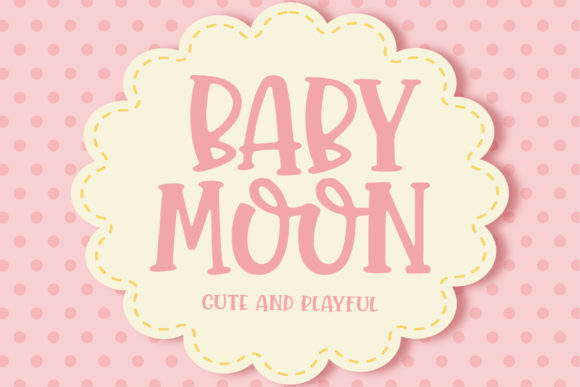
To understand the utility of Baby Moon, one must first analyze its visual DNA. Display fonts are engineered to grab attention, but the methodology varies. Some use sharp edges and high contrast to demand authority; Baby Moon uses softness and unusual geometry to invite curiosity.
- Soft Geometry: Unlike rigid sans-serifs, the curves in Baby Moon are often rounded and organic. This mimics the natural shapes found in nature or childhood objects, triggering a subconscious association with safety and friendliness.
- Bold Weight: The boldness of the font ensures that it does not get lost in complex designs. It anchors the layout, providing a heavy visual weight that balances lighter elements like fine lines or photography.
- Unconventional Proportions: The "quirky" aspect often comes from irregular kerning or exaggerated letter components. This intentional imperfection makes the text feel handmade and authentic, rather than mass-produced by a machine.
Strategic Applications in Modern Design
The decision to use a font like Baby Moon should be driven by the target audience and the message's intent. Because the font carries a specific "vibe," it is not universally applicable, but where it fits, it excels.
Children’s Education and Products
The most obvious application is in the juvenile market. Educational materials, toy packaging, and children’s book covers benefit immensely from typography that mirrors the learning process. Children are drawn to shapes that are distinct and easy to recognize. Using Baby Moon on a workbook cover can make the subject matter seem less intimidating and more like a game, thereby increasing engagement.
Wellness and Self-Care Branding
The wellness industry has shifted away from clinical aesthetics toward a more holistic, emotional approach. Brands focusing on mental health, yoga, or organic skincare often use Baby Moon to suggest that their products are nurturing. The font acts as a visual hug, promising the consumer a positive experience before they even read the product description.
Event Invitations and Stationery
For events such as baby showers, gender reveals, or whimsical birthday parties, the stationery sets the tone. Baby Moon offers a pre-made aesthetic that communicates celebration. It pairs exceptionally well with pastel color palettes and watercolor textures, creating a cohesive look that feels curated and festive.
Integrating Baby Moon into Workflows
For designers and creators, incorporating a specialized font into a professional workflow involves more than just installation. It requires an understanding of hierarchy and pairing.
Creating Visual Hierarchy
Because Baby Moon is bold and distinct, it should rarely be used for long-form paragraphs. Its strength lies in headings, subheadings, and call-to-action buttons. In a website layout, for example, the H1 might utilize Baby Moon to establish the mood immediately. The body text, however, should switch to a neutral, highly legible sans-serif or serif font to ensure readability. This contrast creates a dynamic rhythm on the page.
Font Pairing Strategies
The idiosyncrasies of Baby Moon require a stable partner. Pairing it with another decorative font usually results in visual clutter. Instead, designers should look for clean, geometric sans-serifs (like Montserrat or Poppins) or classic serifs (like Lora). The neutrality of the body text allows the personality of Baby Moon to shine without overwhelming the reader.
Color Psychology and Contrast
The emotional impact of Baby Moon is amplified by color selection. While it can work in monochrome, it truly comes alive with color.
- Pastels: Soft pinks, blues, and yellows enhance the "baby" aspect of the font, reinforcing themes of gentleness and care.
- High Saturation: Conversely, using vibrant neon colors against a dark background can give Baby Moon a retro or street-art feel, appealing to a younger, trend-conscious demographic.
The Psychology of Whimsy in Marketing
Why does a font like Baby Moon work? The answer lies in the psychology of consumer behavior. In a digital world often characterized by seriousness, stress, and information overload, consumers gravitate toward brands that offer relief.
Emotional Resonance: Typography has the power to bypass logical processing and hit emotional triggers. The rounded, soft edges of Baby Moon signal "non-threatening" and "approachable." For a business owner, this reduces the friction between the brand and the customer. A customer is more likely to trust a brand that feels friendly.
Brand Recall: Distinctive fonts are easier to remember. A generic header in Arial might blend into the background noise of the internet, but a header in Baby Moon creates a specific memory anchor. When a user scrolls past a design utilizing this font, the unique letterforms stick in the mind, aiding brand recognition over time.
Technical Considerations and Accessibility
While the aesthetic appeal of Baby Moon is high, technical implementation must be handled with care to ensure the design remains functional.
Scalability
Display fonts are designed to be viewed at large sizes. If Baby Moon is used at very small point sizes (e.g., below 14px), the quirky details that define it may become illegible or blurry. It is essential to test the font across different screen sizes and resolutions. On mobile devices, ensure that the headers remain large enough to retain their character without breaking the layout.
Web Performance
Custom fonts can impact page load times. When adding Baby Moon to a website, it is best practice to use modern font formats like WOFF2, which offer superior compression. Additionally, using font-display: swap ensures that the text remains visible to the user while the font loads, preventing layout shifts and improving the user experience.
Accessibility Standards
Designers must ensure that the use of Baby Moon does not hinder accessibility. Sufficient contrast ratios between the text and the background are vital. Furthermore, because the font is stylistic, it should not be used for critical instructional text where absolute clarity is required. It is a tool for expression, not necessarily for instruction.
Case Study: Redesigning a Local Bakery
Consider a hypothetical scenario involving a local bakery rebranding. The bakery wants to move away from a "rustic" look to a more "modern, fun" aesthetic to attract families.
- The Logo: The bakery name is typeset in Baby Moon. The bold weight ensures it is visible from the street signage, and the quirky style suggests the cakes are fun and creative.
- The Menu: The menu categories (e.g., "Cupcakes," "Donuts") use Baby Moon, while the descriptions of flavors use a standard serif. This makes the menu easy to navigate while maintaining the playful brand voice.
- Social Media: Instagram posts featuring daily specials use Baby Moon overlays on photos. The font stands out against the busy background of food photography, ensuring the message is read instantly.
In this scenario, Baby Moon acts as the unifying thread that connects the physical space, the printed collateral, and the digital presence. It transforms the bakery from a place that sells bread into a destination for joy.
Trends in Typography: The Shift Toward Personality
The popularity of fonts like Baby Moon reflects a broader trend in design: the rejection of corporate sterility. For years, the trend was toward "blanding"—stripping logos and websites of personality to look safe and universal. We are now seeing a correction.
Consumers, particularly Gen Z and Millennials, value authenticity and personality. They want to support brands that have a distinct point of view. Using a bold, joyful display font is a signal that a brand is confident enough to be playful. Baby Moon fits perfectly into this era of "New Maximalism," where more is more, and personality is currency.
Conclusion: The Lasting Impression of Baby Moon
Typography is silent, but it speaks volumes. Choosing to use Baby Moon is a decision to communicate optimism, creativity, and warmth. It is a tool that, when used correctly, can elevate a design from merely functional to emotionally resonant. Whether you are a professional designer crafting a brand identity, an educator creating engaging materials, or a hobbyist making a scrapbook, Baby Moon offers a way to make your work stand out. It reminds us that design doesn't always have to be serious; sometimes, it just needs to make us smile.