Yearbook Font: A Practical Guide for Designers and Creatives
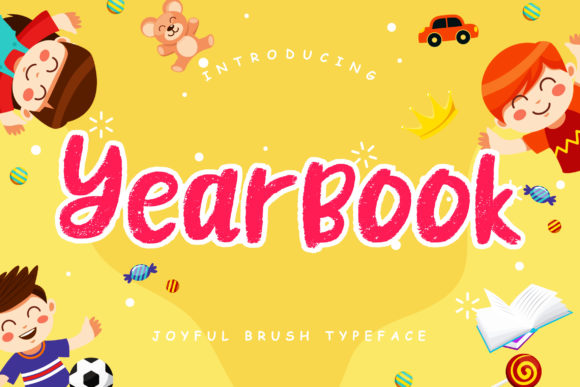
The Yearbook font is a distinct typeface that captures a specific aesthetic: joyful, friendly, and energetic. Its character is defined by its origin—a design crafted with the help of a brush pen. This gives it a hand-lettered quality that feels personal and authentic. For anyone exploring display fonts, Yearbook presents an option that can add warmth and a human touch to digital projects. This guide provides a balanced look at its features, ideal applications, and important considerations to help you decide if it aligns with your design goals.
Understanding the Core Characteristics of Yearbook
At its heart, Yearbook is a display font, meaning it is primarily designed for headlines, logos, and short, impactful text rather than for body copy. Its most notable trait is the visible influence of a brush pen in its strokes. This results in slight variations in line weight and a soft, rounded form that feels organic. The overall impression is one of approachability and cheerfulness, making it a strong candidate for projects that aim to connect with an audience on an emotional level. It is not a neutral or corporate typeface; it carries a distinct personality that will influence the tone of any design it is used in.
Evaluating the Potential Benefits and Fit
When considering Yearbook, it's helpful to think about the specific benefits it offers and the contexts where those benefits are most valuable.
Where Yearbook Can Excel
The font's friendly demeanor makes it particularly effective in certain scenarios. It can be a strong fit for projects targeting a younger audience or those centered on community, celebration, and nostalgia. Consider its use for:
- Event Branding: School yearbooks (a natural namesake), reunion invitations, party flyers, or festival posters where a festive and personal vibe is desired.
- Children's Products: Book covers, educational materials, or packaging for toys and snacks where a playful and trustworthy tone is beneficial.
- Lifestyle & Hobby Content: Blog headers, social media graphics for crafts, baking, or DIY projects, and menu designs for casual cafes or bakeries.
- Personal Projects: Creating personalized gifts, greeting cards, or scrapbook elements where a handmade feel adds sentimental value.
In these situations, the font's personality directly supports the project's message, making the design feel more cohesive and intentional.
Key Considerations and Potential Tradeoffs
No typeface is universally perfect, and evaluating Yearbook requires acknowledging its limitations. Its greatest strength—its pronounced personality—can also be a constraint. The very qualities that make it joyful can feel out of place in contexts requiring solemnity, authority, or sleek modernity. For instance, it would likely be inappropriate for a legal firm's website, a luxury brand's minimalist brochure, or formal academic publications.
Another important consideration is readability at small sizes. As a display font with brush-style details, it is not optimized for long paragraphs of text. Using it for body copy would likely result in poor legibility and reader fatigue. Its design demands larger sizes where its character can be fully appreciated without hindering comprehension.
Furthermore, because it is a stylistic font, it may have limited character sets or weights compared to a full-featured type family. Always check the available glyphs (letters, numbers, symbols) to ensure it supports your language and typographic needs.
Practical Decision-Making: When to Choose Yearbook and When to Look Elsewhere
Making a final decision involves comparing your project's requirements against the font's profile. Ask yourself these practical questions:
Does the project's tone align with "joyful and friendly"? If the answer is a clear yes, and the context is informal, celebratory, or personal, Yearbook is a strong candidate. If the tone is serious, professional, or ultra-modern, you should explore alternatives.
What is the primary use case? If you need a striking headline, logo, or short caption, it could work well. If you need a font for reading dense text, you absolutely need a complementary typeface for body copy (like a simple sans-serif or serif font) and should reserve Yearbook only for accents.
Who is the audience? Research your target audience's expectations. A design for a children's camp will have different typographic norms than one for a financial technology startup.
Exploring Alternatives
If Yearbook doesn't quite fit, the market is rich with other options. If you like the hand-drawn quality but need something more subtle, consider other brush fonts with less pronounced texture. If the goal is friendliness without the brush style, rounded sans-serif fonts like Quicksand or Nunito offer a softer feel while maintaining excellent readability. For projects that need a mix of personality and professionalism, a versatile type family with multiple weights (like Proxima Nova or Lato) might provide more flexibility.
Conclusion: Integrating Yearbook into Your Creative Process
Ultimately, Yearbook is a specialized tool in a designer's toolkit. It is not a one-size-fits-all solution, but when used in the right context, it can inject a design with genuine warmth and energy. The key is to evaluate it objectively against your project's goals, audience, and required tone. By understanding its strengths as a joyful, brush-inspired display font and its limitations in formal or dense text settings, you can make an informed choice. Test it in your mockups, pair it with complementary typefaces, and see if its unique character helps your creative ideas stand out in the way you intend. A thoughtful selection process will ensure that any font you choose, including Yearbook, serves your design's purpose effectively.