The Art of Stencil: How Daichi Redefines Modern Typography
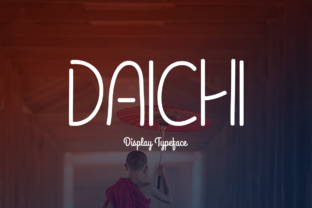
In the vast world of graphic design, typography often serves as the silent ambassador of a brand's personality. While serif and sans-serif fonts provide the backbone of corporate communication, there is a distinct category of typefaces that offers something far more visceral: the stencil font. Within this niche, Daichi has emerged as a standout option, bridging the gap between industrial utility and organic artistry. It is not merely a set of characters; it is a design tool that brings a human touch to the often sterile digital landscape. By combining the structural integrity of stenciling with the fluidity of hand-drawn strokes, Daichi offers a unique aesthetic that appeals to professionals and hobbyists alike.
The Organic Nature of Stencil Design
To understand the value of Daichi, one must first appreciate the history of stencil typography. Traditionally, stencils were used for marking crates, military equipment, and industrial signage. They were functional, utilitarian, and rigid. However, modern design trends have moved toward authenticity and imperfection. Daichi capitalizes on this shift by retaining the characteristic breaks of a stencil font while softening the edges with organic hand strokes.
This duality is what makes the font so charming. Unlike traditional stencils that feel cold and mechanical, Daichi feels as though it was painted by a human hand using a physical template. The ink bleeds slightly, and the lines are not mathematically perfect, yet the structure remains legible and bold. This "perfectly imperfect" quality allows designers to inject character into their work without sacrificing readability. It is a font that whispers of street art, maker culture, and creative freedom.
Why Organic Strokes Matter
In digital marketing and user interface (UI) design, authenticity is currency. Consumers are increasingly savvy and can detect generic, stock-standard assets instantly. By utilizing a font like Daichi, creators can bypass the "uncanny valley" of digital perfection. The organic strokes suggest that a real person was involved in the creation of the content. This psychological cue helps build trust and rapport with the audience. Whether it is used on a website header or a product label, the texture of the font adds a layer of depth that flat, vector-based typefaces cannot achieve.
Practical Applications Across Industries
One of the most significant strengths of Daichi is its versatility. While many novelty fonts are restricted to specific themes—such as horror or retro—Daichi functions as a "freestyle" option suitable for a wide array of projects. Its utility spans across different sectors, proving that a stencil font can be both fun and sincere.
Branding and Packaging
For business owners and packaging designers, shelf appeal is everything. Daichi excels in the consumer goods sector, particularly for brands that want to project an image of craftsmanship or eco-friendliness. Imagine a craft brewery using Daichi for its label text, or an artisanal coffee roaster using it for their packaging. The font communicates that the product inside is handmade and cared for. It stands out against the clean, minimalist fonts often used by mass-market competitors, offering a tactile visual experience that invites the consumer to pick up the product.
Editorial and Web Design
Web designers and content creators face the challenge of maintaining user engagement. Long blocks of text can be tedious, but strategic typography can guide the reader’s eye. Daichi is an excellent choice for pull quotes, hero sections, and blog headers. It breaks the monotony of standard web-safe fonts and adds a dynamic rhythm to the page layout. For educators and researchers creating presentations or infographics, Daichi can be used to highlight key data points or section headers, making the information feel more accessible and less intimidating than a rigid corporate typeface.
Merchandise and Apparel
The apparel industry thrives on statement pieces. Tote bags, t-shirts, and hats often rely on bold typography to convey a message. Daichi’s stencil nature makes it highly legible from a distance, while its hand-drawn quality ensures it looks stylish up close. It avoids the aggressive, militaristic look of traditional stencil fonts, making it suitable for casual wear, youth-oriented brands, and creative merchandise. It is a font that looks as good on a tote bag at a farmer's market as it does on a poster for a music festival.
The Psychology of Handwritten Aesthetics
Typography influences mood. Serif fonts evoke tradition and authority; geometric sans-serifs suggest modernity and efficiency. Daichi, with its freestyle construction, evokes creativity, openness, and approachability. This is crucial for brands trying to connect with a broad audience.
When a user sees a font that mimics human imperfection, it triggers a different emotional response than seeing a font generated by a machine. It feels more personal. This is particularly relevant in the "creator economy," where individuals are building personal brands. A podcaster, a You tuber, or an independent consultant can use Daichi to create a visual identity that feels grounded and real. It signals that the creator is approachable and authentic, rather than corporate and distant.
Technical Considerations and Readability
While aesthetics are important, functionality cannot be ignored. A common pitfall with display and stencil fonts is poor readability at smaller sizes. Daichi addresses this through careful design choices. The "islands" (the parts of the letter that create the stencil break) are positioned to maintain the letterform's integrity. This ensures that the font remains legible even when used in subheadings or shorter blocks of text.
Hierarchy and Pairing
For designers looking to implement Daichi, understanding font pairing is essential. Because Daichi has such a strong personality, it works best when paired with a neutral, highly legible body font. A clean sans-serif or a simple serif font provides the necessary contrast, allowing Daichi to shine as the accent typeface without overwhelming the viewer.
- High Contrast Pairing: Use Daichi for headers combined with a light, geometric sans-serif for body text. This creates a modern, edgy look.
- Harmonious Pairing: Combine Daichi with a rounded, humanist sans-serif. This leans into the organic, friendly vibe of the font.
- Color Usage: Daichi looks best in solid colors. Using gradients can sometimes obscure the stencil breaks. High contrast colors (black on white, or white on a dark background) emphasize the stencil effect.
Standing Out in a Saturated Market
The digital space is crowded. Every brand is fighting for attention, and visual fatigue is a real phenomenon. Using standard system fonts is a safe choice, but it rarely leads to differentiation. Daichi offers a way to step outside the safety zone without taking a massive risk.
Because it balances "fun" and "sincerity," it avoids the trap of being too gimmicky. Fonts that are overly playful can be dismissed as childish, while fonts that are too serious can be boring. Daichi occupies the sweet spot. It is professional enough for a business proposal but creative enough for a streetwear brand. This versatility is a rare quality in typeface design.
Observations on Design Trends
Current design trends are moving toward "neo-retro" and "analog" aesthetics. We see this in the resurgence of film photography filters, grain textures, and brutalist web design. Daichi fits perfectly into this zeitgeist. It acknowledges the digital medium but pays homage to physical, tactile creation. It suggests that behind the screen, there is a human being with a pen, a brush, or a stencil can.
Implementing Daichi in Your Workflow
For creators and professionals looking to integrate Daichi into their toolkit, the process should be approached with intentionality. It is not a "set it and forget it" font. It requires context to truly shine.
- Identify the Message: Before applying Daichi, ask if the content requires a human touch. If the goal is to convey cold, hard data or legal information, a different font might be appropriate. If the goal is to inspire, invite, or excite, Daichi is likely the right choice.
- Test at Scale: Always test the font at the specific size it will be used. While it is legible, the stencil breaks might disappear if the font is rendered too small (under 14px), causing it to look like a blurry sans-serif rather than a stencil.
- Consider the Background: Stencil fonts rely on negative space. Ensure the background behind the text is not too busy, or the stencil effect will be lost in the visual noise.
The Future of Freestyle Typography
As AI-generated content and perfect vector graphics become the norm, the demand for imperfect, human-centric design will only grow. Fonts like Daichi represent a rebellion against the machine-perfect aesthetic. They remind us that design is an art form, not just a utility.
For educators, Daichi can make learning materials feel more engaging and less rigid. For business owners, it can soften a brand's image and make it more relatable. For hobbyists, it is a playground for creativity. The "stencil" style has evolved from a method of mass production to a symbol of individual expression, and Daichi is at the forefront of that evolution.
Final Thoughts on Utility
Ultimately, the value of a typeface lies in its ability to communicate a message effectively and with the desired emotional resonance. Daichi succeeds because it does not try to be everything to everyone. It knows what it is: a charming, stencil-based font with an organic soul. It offers a specific flavor that, when applied to the right project, elevates the entire design. Whether you are designing a logo, a website, a poster, or a t-shirt, Daichi provides a reliable way to add that much-needed spark of character and sincerity.