Integrating Boneka: A Practical Guide to Using a Cute and Childish Decorative Font
Understanding Boneka's Place in Your Design Toolkit
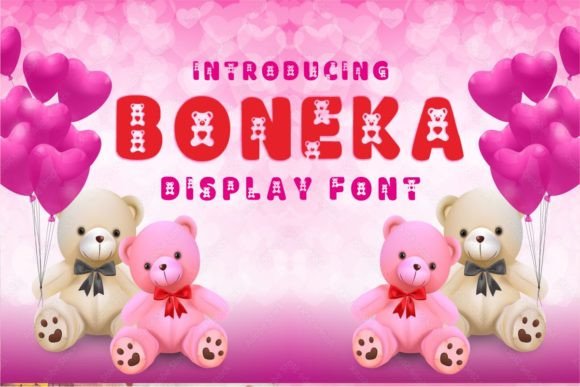
When building a cohesive visual identity, the choice of typeface is a foundational decision that influences every subsequent step in the design process. Boneka is a specific category of typeface: a childish and cute decorative font designed to inject a sense of playfulness and approachability into a project. Its informal and casual style makes it a top choice for creations aiming to evoke warmth, nostalgia, or a lighthearted mood. Unlike a workhorse sans-serif meant for long-form reading, Boneka serves a distinct, strategic role. Understanding where it fits—both in the hierarchy of a single design and within your broader workflow—is key to using it effectively without compromising professionalism or clarity.
Think of your font library as a professional toolkit. You have your primary tools for heavy lifting—your Roboto, Open Sans, or Lato for body text—and your specialty tools for precise, impactful work. Boneka is a specialty tool. It is not for drafting a business report or setting a 500-page novel. Its value is realized in targeted applications where personality and visual charm are the primary objectives. Its interaction with other assets is critical; it often requires a clean, simple companion font to balance its exuberance and ensure the overall design remains legible and structured.
Strategic Planning: When to Deploy Boneka
The decision to use a font like Boneka should be made during the planning or mood-boarding phase of a project, not as an afterthought. Ask yourself: what is the core emotion or message of this piece? If the project's success depends on connecting with an audience through a sense of fun, whimsy, or childlike wonder, then Boneka enters the candidate list. This applies to both commercial and personal projects. A children's book publisher, a small business owner creating handmade toy labels, or a freelancer designing a birthday party invitation would all find this font aligns with their goals.
Consider the user journey. For a product package, Boneka on the front label can attract the eye and set expectations for a playful product inside. However, the nutritional information or instructions on the back would require a highly legible, standard font. This is where compatibility and a systematic approach are vital. You are not choosing one font for everything; you are orchestrating a typographic system where each member has a defined role. Boneka is your headline or accent font, the visual equivalent of a bright, welcoming smile at the front door.
Practical Implementation and Workflow Integration
Integrating Boneka into your workflow smoothly requires a few practical steps. First, ensure font compatibility. Before finalizing a design, verify that the font renders correctly across all intended platforms—this is especially important for digital use on websites or in apps. Check its licensing to confirm it permits your planned use, whether for personal projects, commercial merchandise, or client work.
Next, establish clear usage rules within your project's style guide. Define where Boneka will be applied. A common and effective practice is to use it for:
- Headlines and Titles: On posters, flyers, or social media graphics to grab attention.
- Logo and Wordmark Design: For brands whose identity is inherently cute, casual, or youthful.
- Product Packaging Accents: On labels for items like cookies, crafts, or children's apparel.
- Merchandise: On T-shirts, tote bags, or stickers where a fun, graphic statement is desired.
- Event Materials: For birthday cards, wedding invitations with a casual theme, or festival signage.
Pairing is where the real work happens. Boneka interacts most successfully with a clean, geometric sans-serif or a simple, readable serif font. This pairing creates a necessary contrast that maintains hierarchy and readability. For example, you might use Boneka for a T-shirt's main graphic phrase, but choose a font like Poppins or Lato for any supporting text or smaller details. This process of selection and pairing is a critical quality control step. Test the combination at various sizes and in the final medium to ensure the playful font doesn't become garish or the body text doesn't become lost.
Use Cases and Observations from Real Projects
Observing how Boneka performs in different contexts reveals its strengths and limitations. In product packaging for artisanal soaps or candles, it can convey a handmade, gentle quality. The key is to use it sparingly—perhaps only for the product name—and to ensure the font's weight and spacing are adjusted so it doesn't crowd the design. For logos, it's a bold choice that immediately defines brand personality. A logo using Boneka would be ill-suited for a law firm but could be perfect for a pet grooming service or a cupcake bakery.
On digital platforms, consider its application in blog graphics or Instagram posts. It can make a quote or a call-to-action stand out. However, for body text in a blog post or email, it would be impractical and tiresome to read. This highlights a crucial observation: the best use of a decorative font is almost always as a highlight, not a foundation. Its efficiency lies in its impact-per-character, not in its versatility for continuous reading.
Long-term use requires organization. If you decide Boneka is a core part of your brand's visual toolkit, create a reference document that specifies its exact color codes, sizes, and paired fonts for different applications. This ensures consistency across all materials, whether created by you, a team member, or a hired freelancer. This level of preparation turns a fun font into a reliable, professional asset.
Making the Decision: Is Boneka Right for Your Project?
The final decision to use Boneka should be a conscious one, based on project goals and audience analysis. Review your project brief or personal goal. Does it call for a casual, approachable, and cute aesthetic? If yes, Boneka is a strong contender. If the project demands seriousness, authority, or minimalist elegance, you should look elsewhere.
Consider your audience. Adults aged 20-50 are the target demographic, but within that range, context is everything. A freelancer designing for a client in the toy industry would use it confidently. A marketer creating a campaign for a tech startup would likely avoid it. The font's effectiveness is entirely dependent on its alignment with the message and the recipient's expectations.
Ultimately, integrating Boneka is an exercise in thoughtful design process. It begins with planning, moves through careful implementation and pairing, and results in a controlled, impactful outcome. By respecting its specific character and using it as a deliberate accent within a broader system, you can harness its childish and cute charm to create designs that are not only visually appealing but also strategically effective. It’s a tool that, when used with intention, can bring a unique and memorable personality to your creative work.